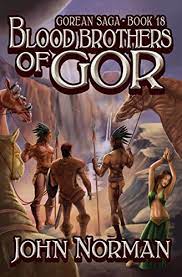
Book 18. (1 results) Blood Brothers of Gor (Individual Quote)
| Chapter # | Sentence # | Quote |
|---|---|---|
| 1 | 240 | He had View more quotes about twice">twice refused to go on the warpath against the Fleer, hereditary enemies of the Kaiila. |
 |
Book 18. (7 results) Blood Brothers of Gor (Context Quote)
| Chapter # | Sentence # | Quote |
|---|---|---|
| 1 | 237 | Cuwignaka, on the back of his kaiila, wore the remains of a white dress, a portion of the loot of a destroyed wagon train. |
| 1 | 238 | He had been a slave of soldiers traveling with the train. |
| 1 | 239 | Originally he had been Isbu Kaiila. |
| 1 | 240 | He had twice refused to go on the warpath against the Fleer, hereditary enemies of the Kaiila. |
| 1 | 241 | The first time he had been put in the dress of a woman and forced to live as a woman, performing the work of a woman and being referred to in the feminine gender. |
| 1 | 242 | It was from that time that he had been called Cuwignaka, which means "Woman's Dress". |
| 1 | 243 | It is, moreover, the word for the dress of a white woman and, in this, given the contempt in which the proud red savages hold white females, commonly reducing them to fearful, groveling slaves, utilizing them as little more than beasts of burden and ministrants to their will, in all respects, it possesses to the Kaiila an additional subtle and delicious irony. |
|
Cuwignaka, on the back of his kaiila, wore the remains of a white dress, a portion of the loot of a destroyed wagon train.
He had been a slave of soldiers traveling with the train.
Originally he had been Isbu Kaiila.
He had twice refused to go on the warpath against the Fleer, hereditary enemies of the Kaiila.
The first time he had been put in the dress of a woman and forced to live as a woman, performing the work of a woman and being referred to in the feminine gender.
It was from that time that he had been called Cuwignaka, which means "Woman's Dress".
It is, moreover, the word for the dress of a white woman and, in this, given the contempt in which the proud red savages hold white females, commonly reducing them to fearful, groveling slaves, utilizing them as little more than beasts of burden and ministrants to their will, in all respects, it possesses to the Kaiila an additional subtle and delicious irony.
- (Blood Brothers of Gor)